


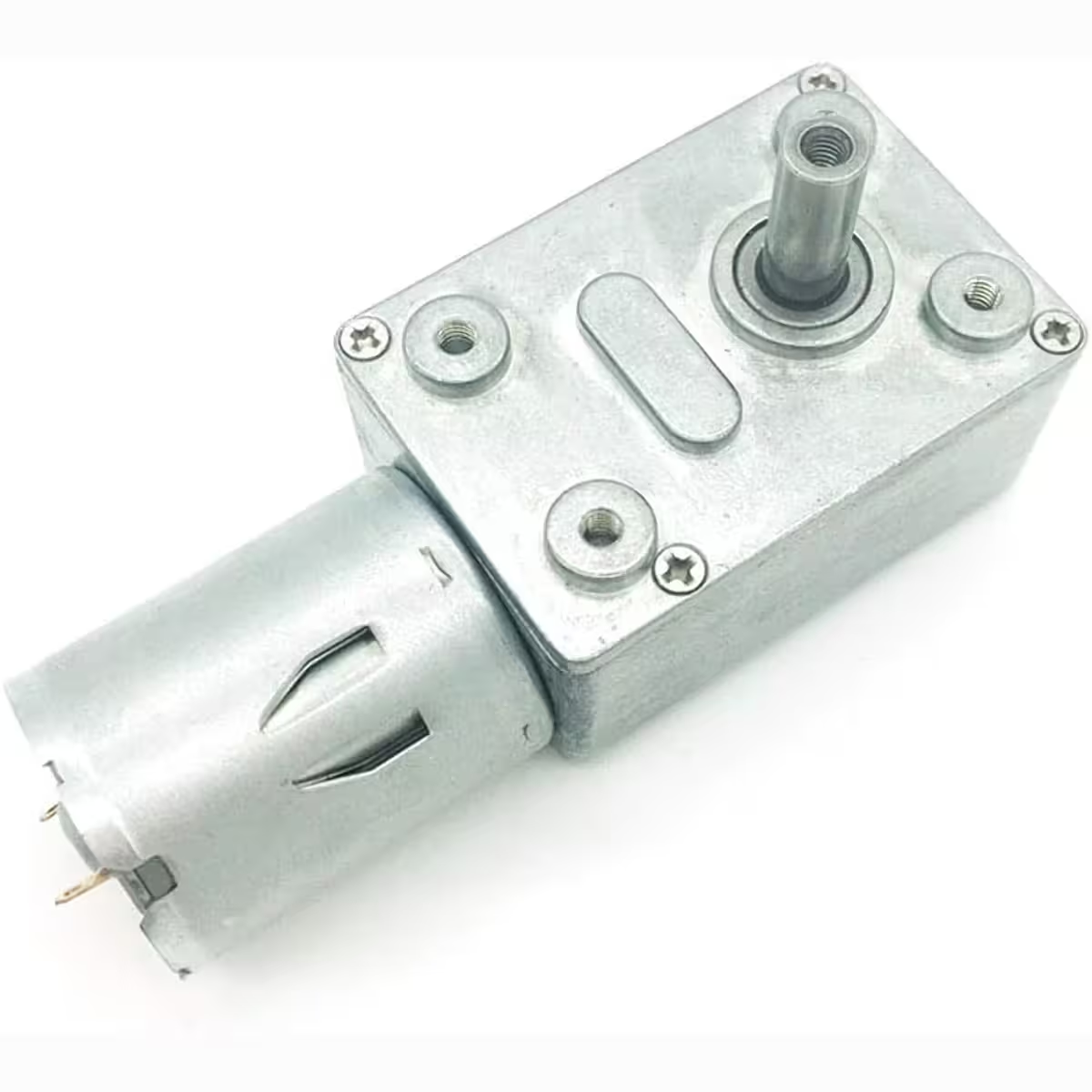
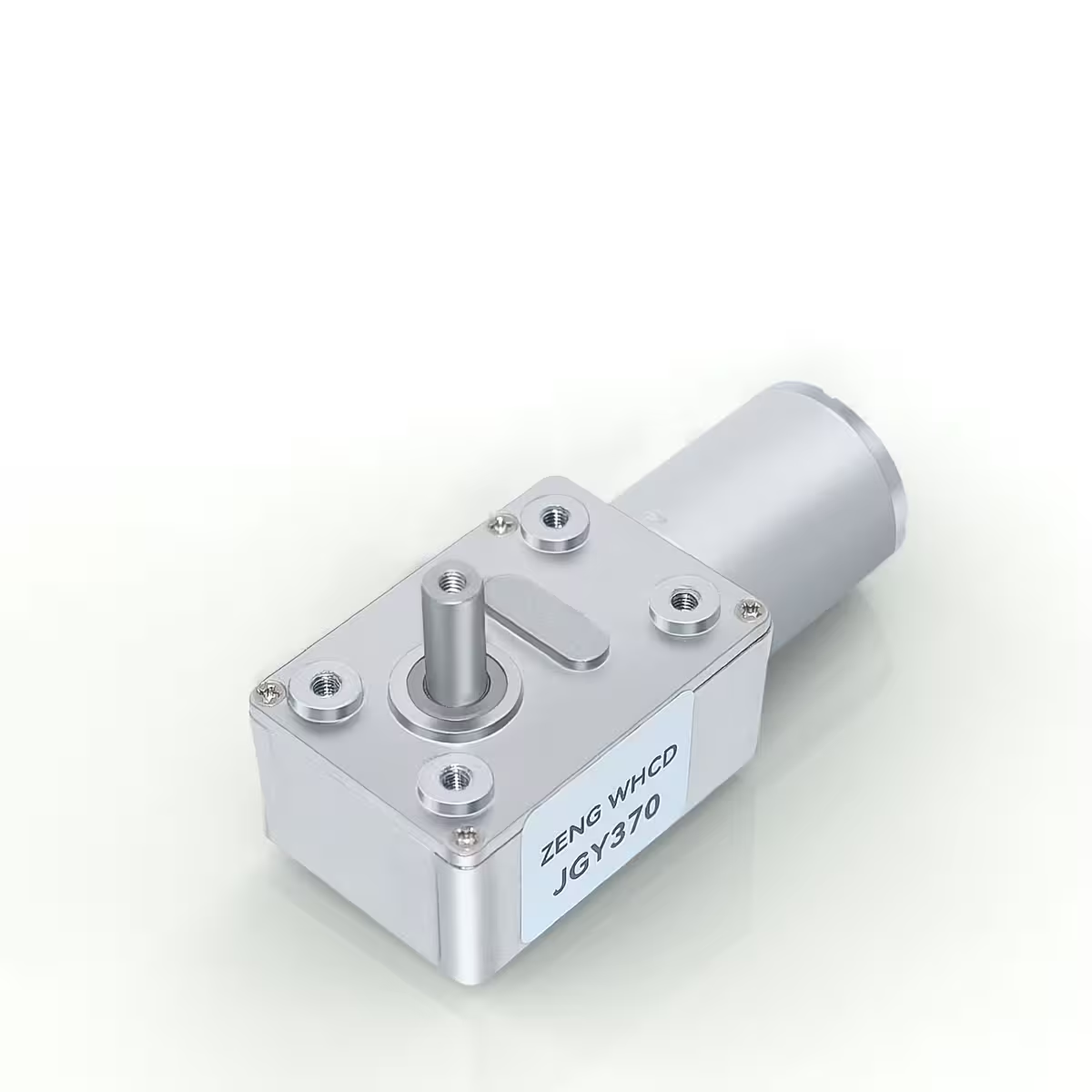
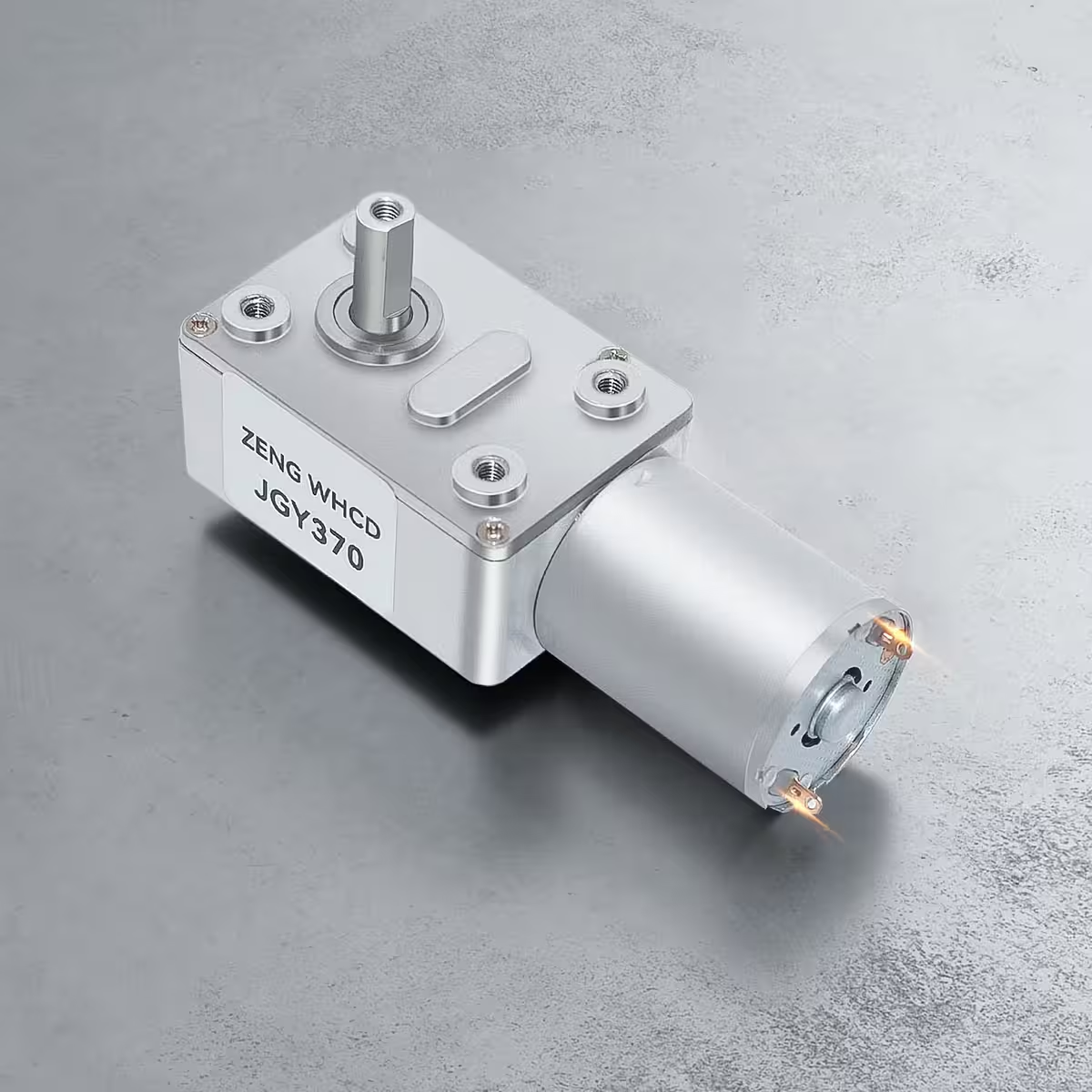
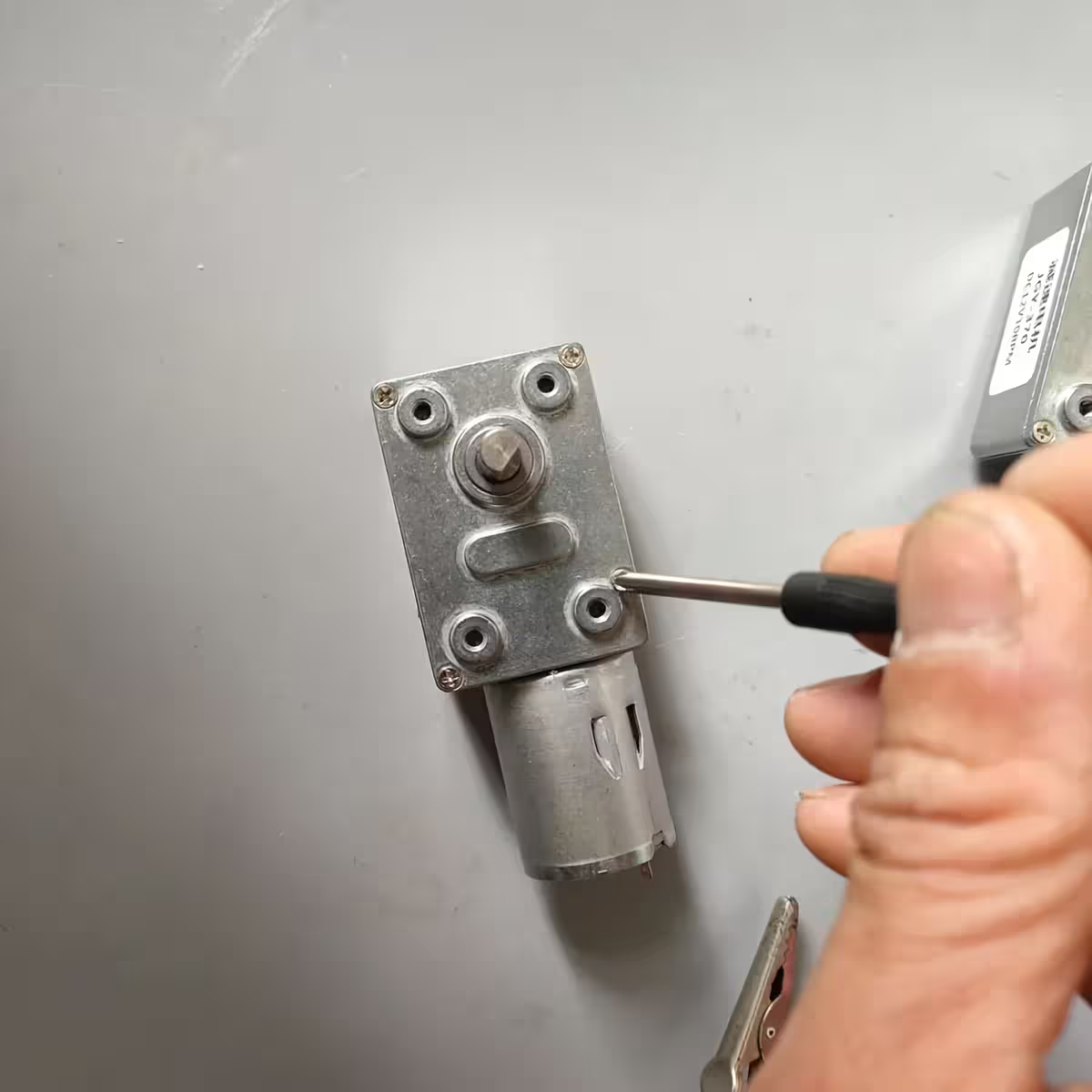
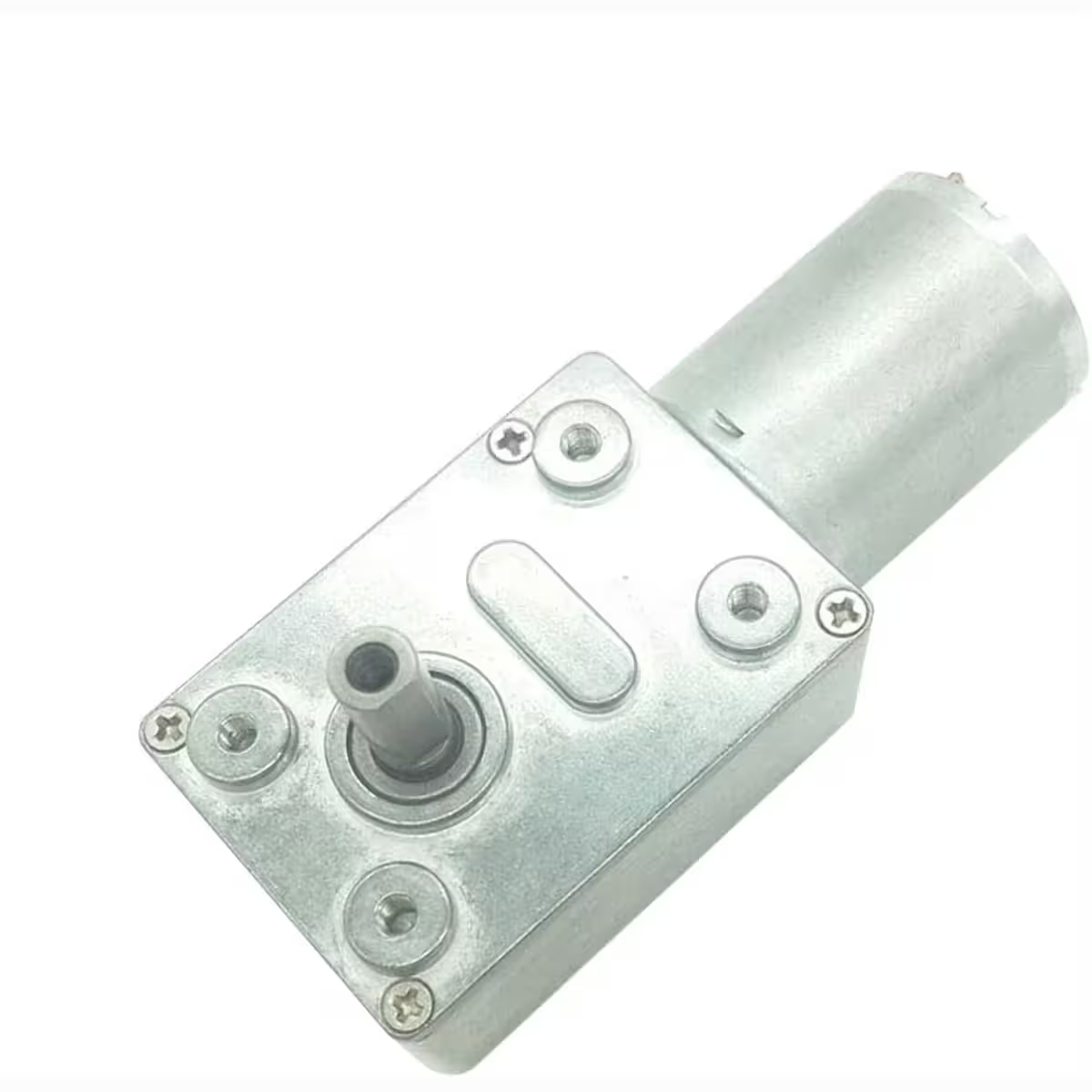
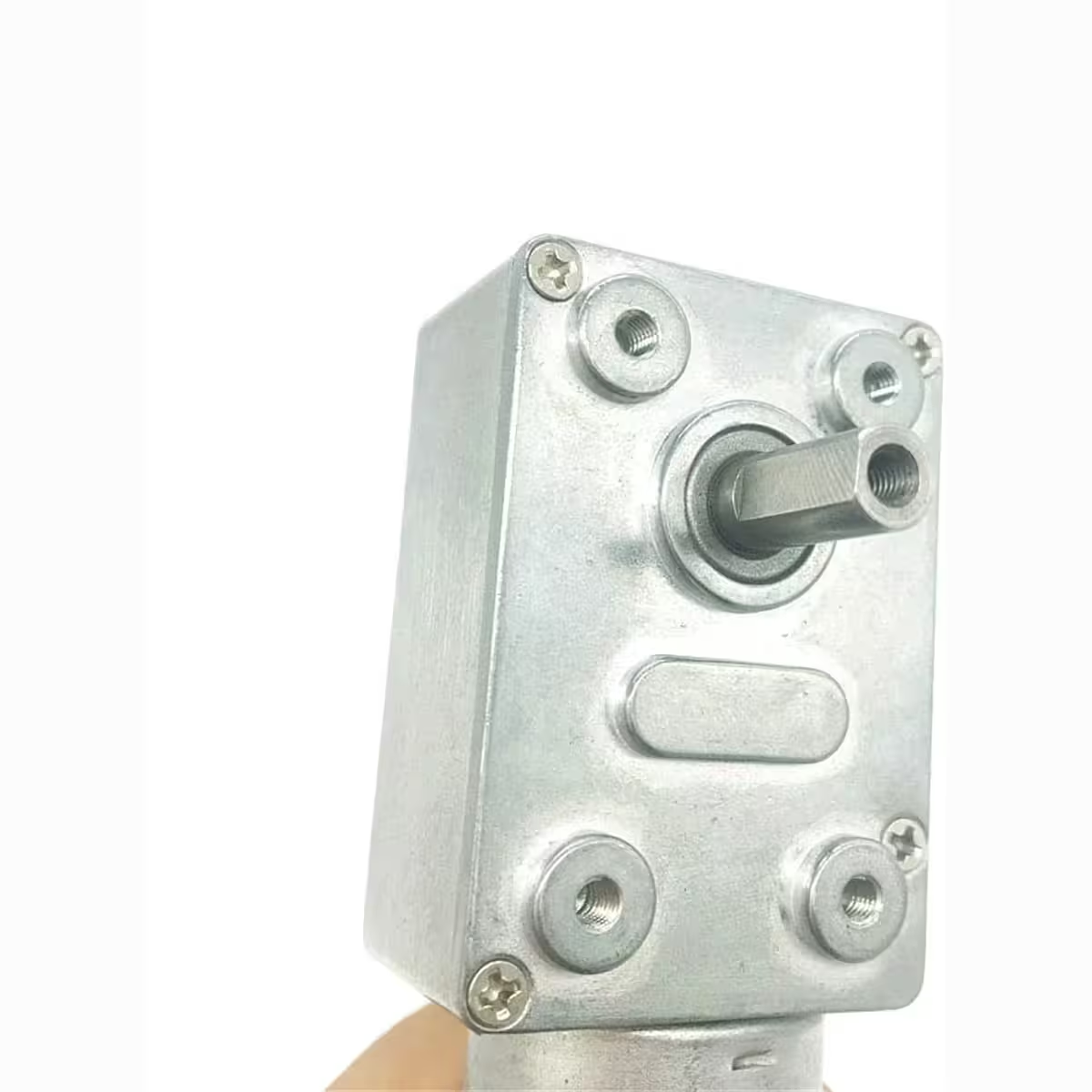
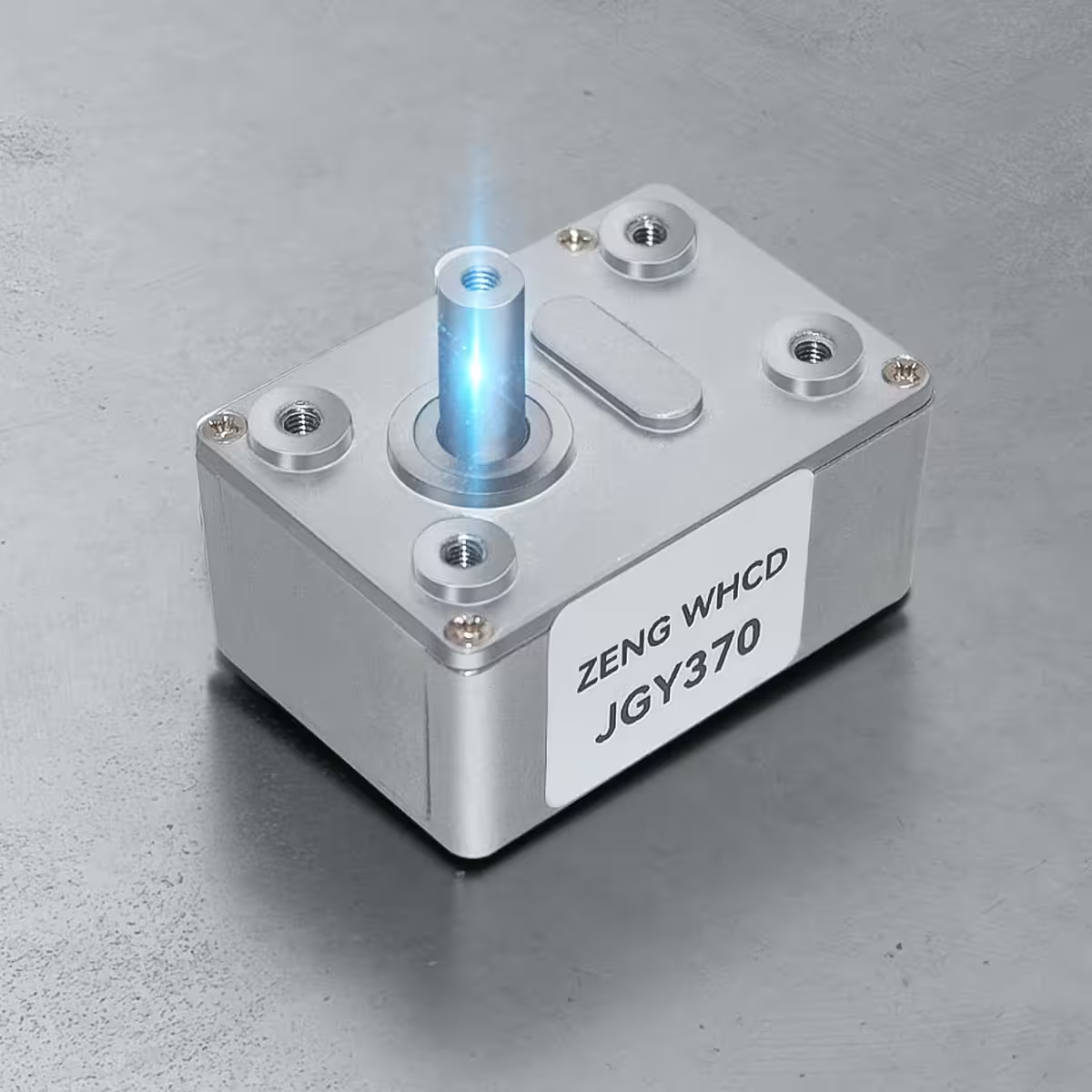
GY-370 12V Worm Gear Motor – Self-locking without brakes, up to 15 kg·cm torque
Do you need a mechanism to stay firmly in place once it stops, without wasting energy or requiring extra brakes? The GY-370 12V worm gear motor achieves this through its clever design, not complex electronics. When you cut the power, the shaft stays put. Simple as that.
Note: This product is available in three gear ratios (87:1, 200:1, 600:1). Please select the version that best suits your speed and torque requirements from the product options.
Why choose this model? (Key benefits):
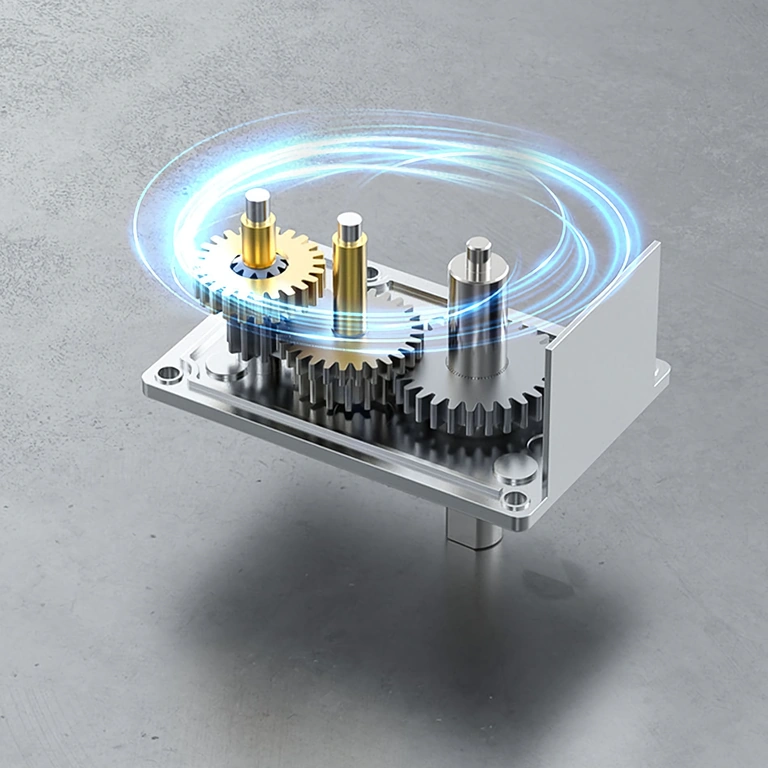
- Native mechanical self-locking — The worm gear design locks the shaft the moment power is cut, requiring no relays, brakes, or extra power consumption.
- Real torque up to 15 kg·cm — The 600:1 ratio handles heavy-duty mechanisms, not just lightweight lab prototypes.
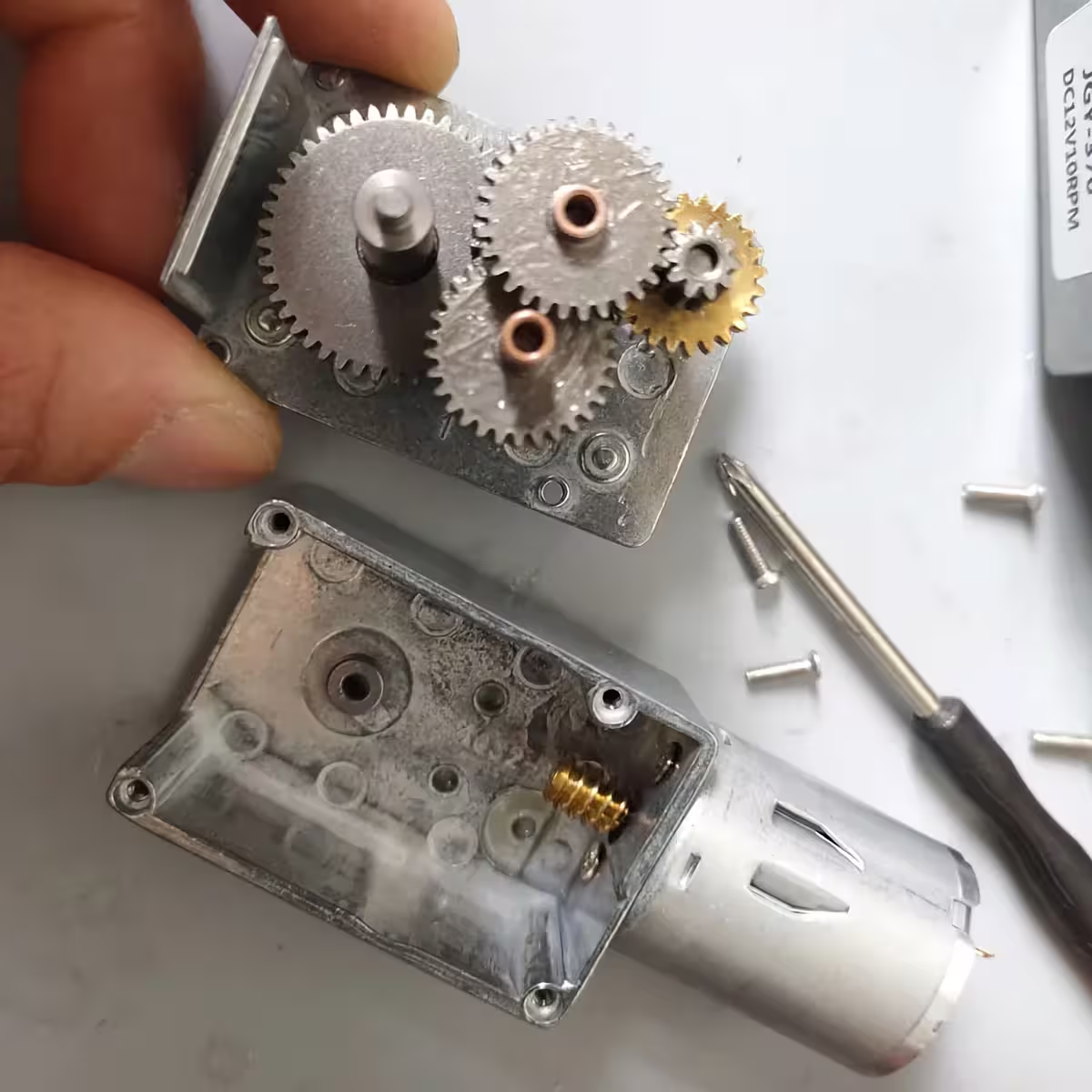
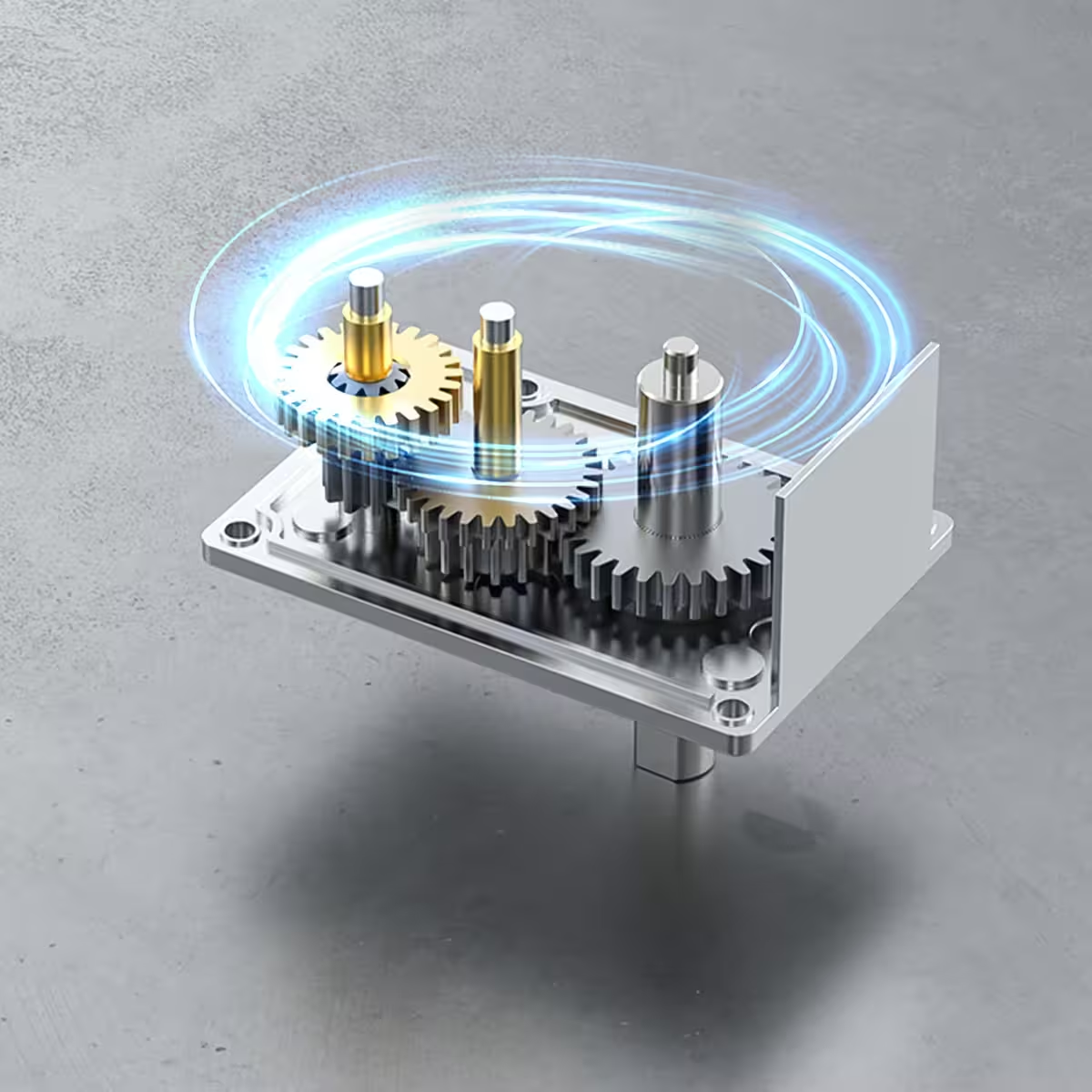
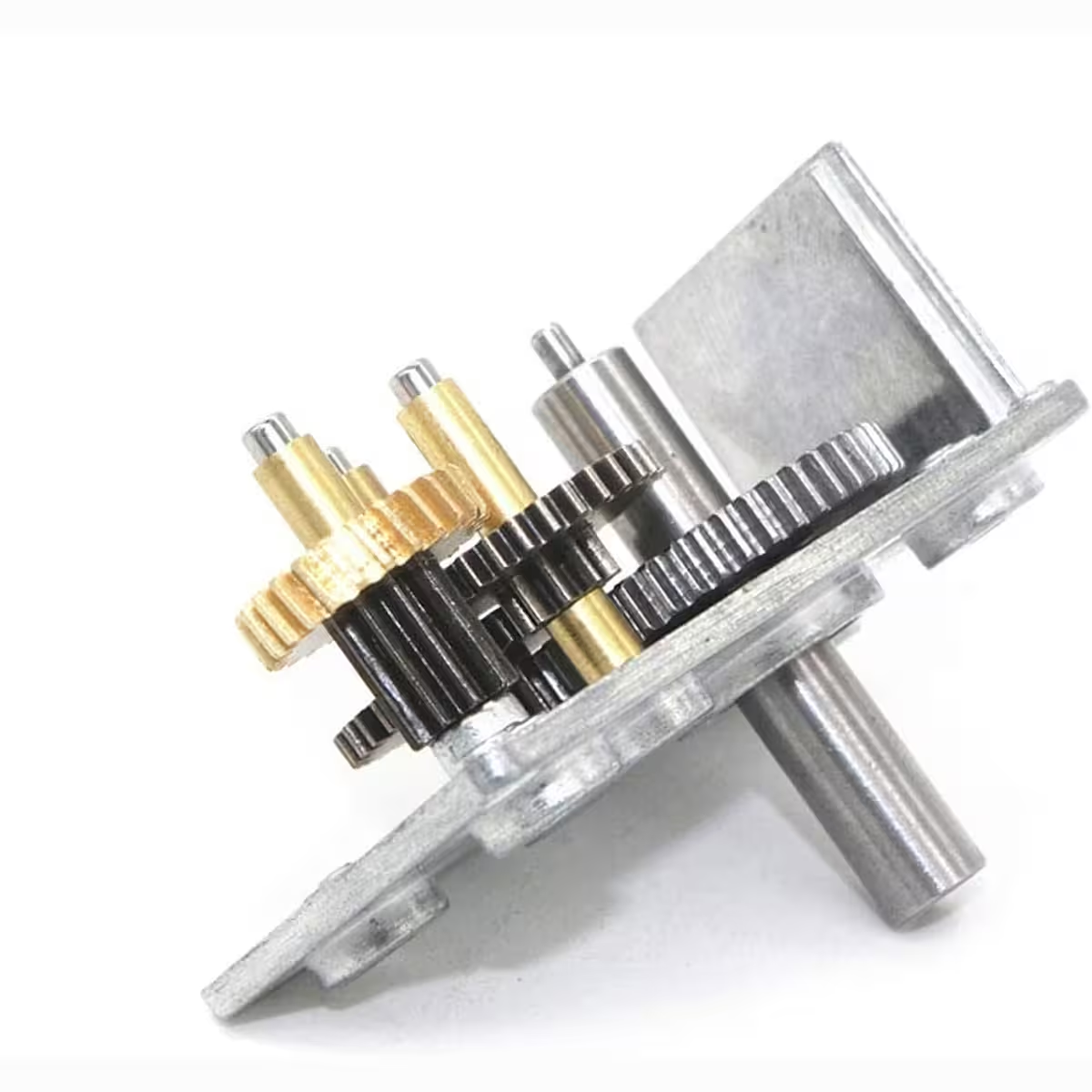
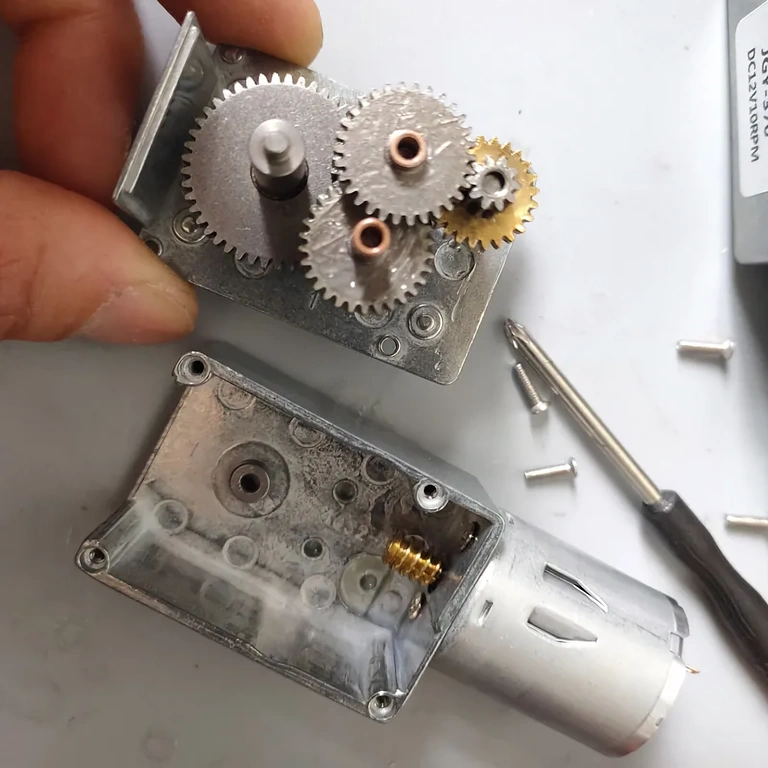
- 100% metal gears — Unlike plastic-gear alternatives, these are built to withstand continuous use without premature wear.
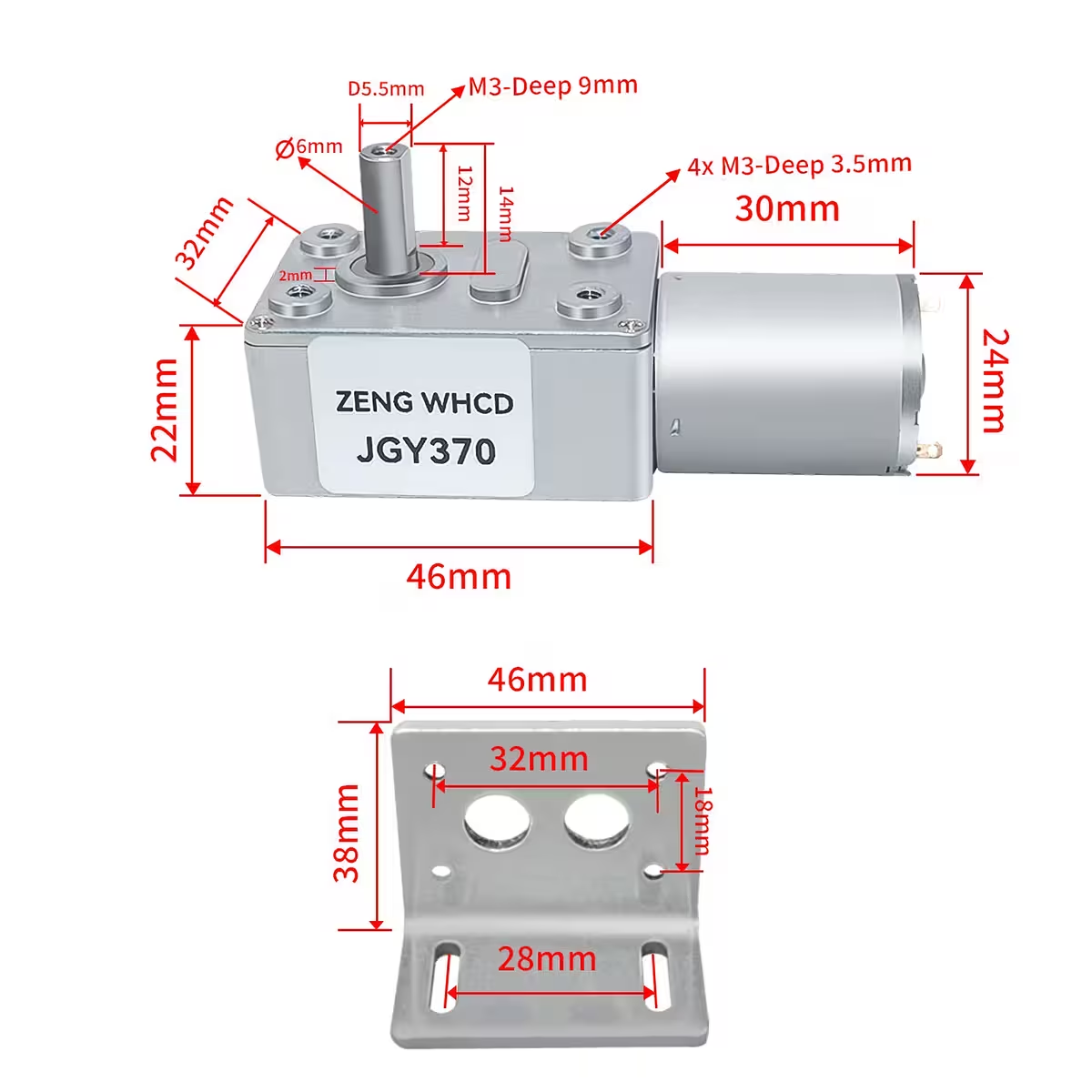
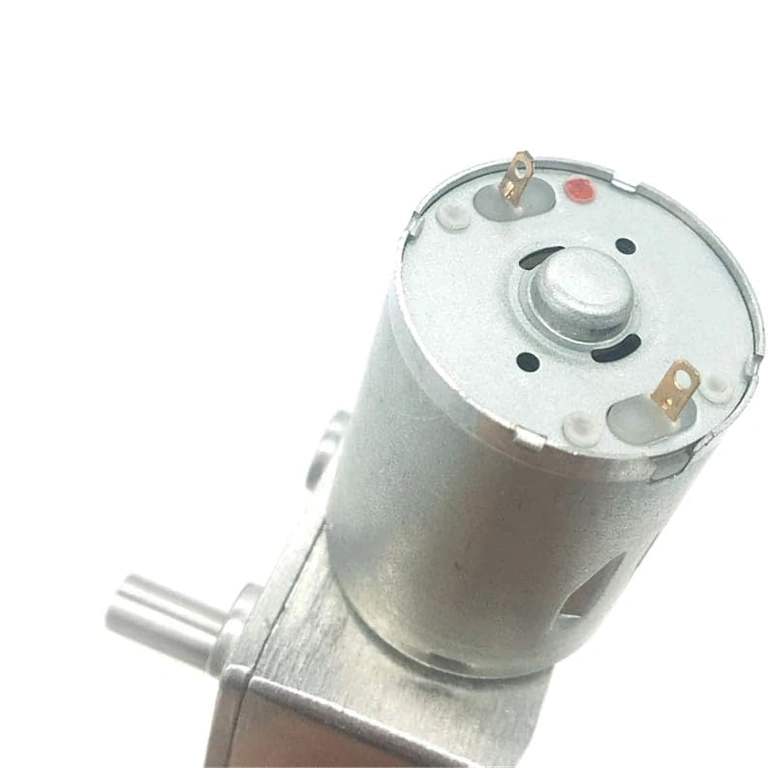
- Hardened steel D-profile shaft — Ensures a secure, slip-free connection for wheels, cams, or robotic arms, even under maximum torque.
- Consistent 0.2A load current — Predictable power draw regardless of the ratio, making it easy to size your power supply.
- Instant direction change — Simply reverse the polarity to change the rotation direction immediately, without needing extra circuitry.
- Three gear ratios available — 87:1 for speed, 200:1 for balance, and 600:1 for maximum torque at 7 RPM.
Details and Performance
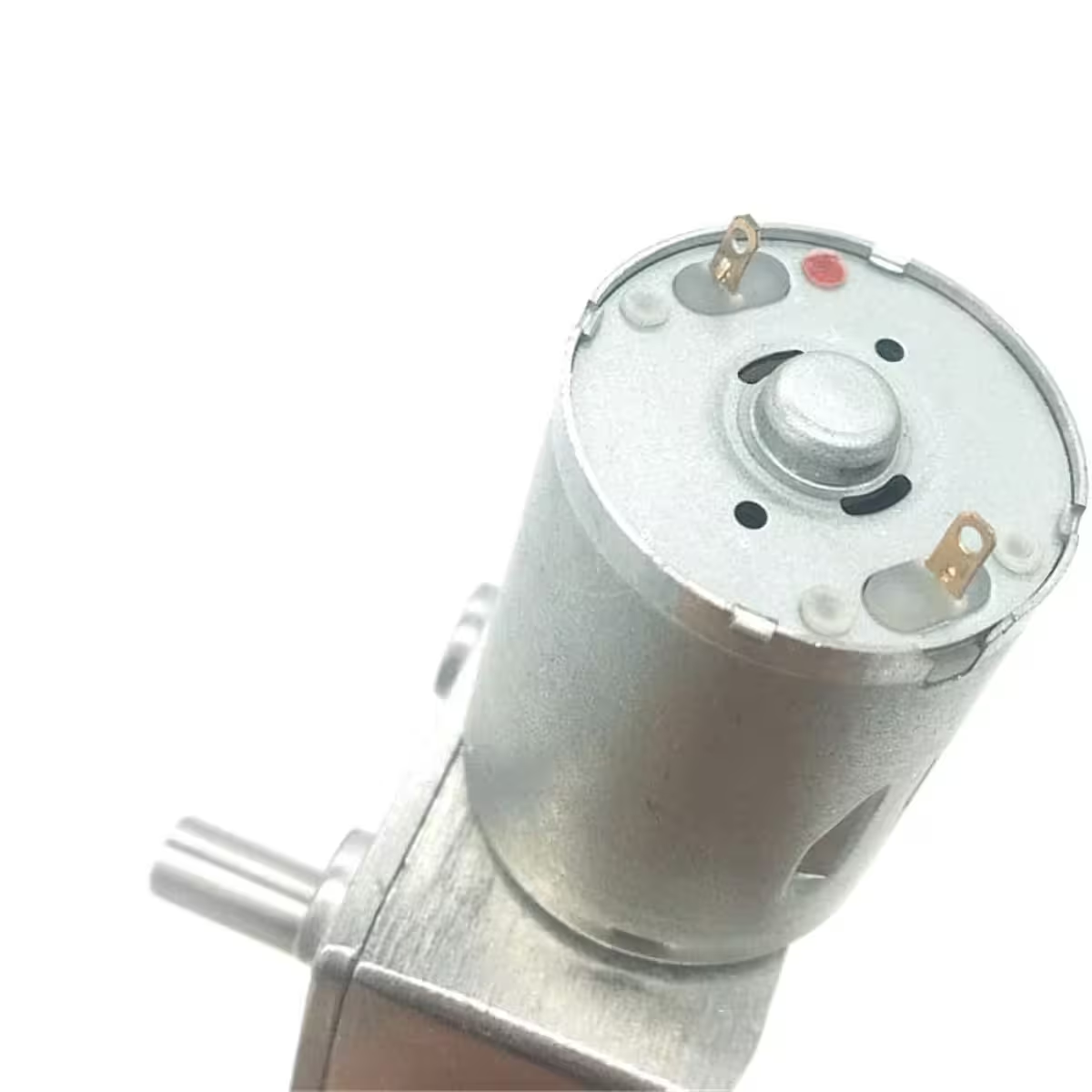
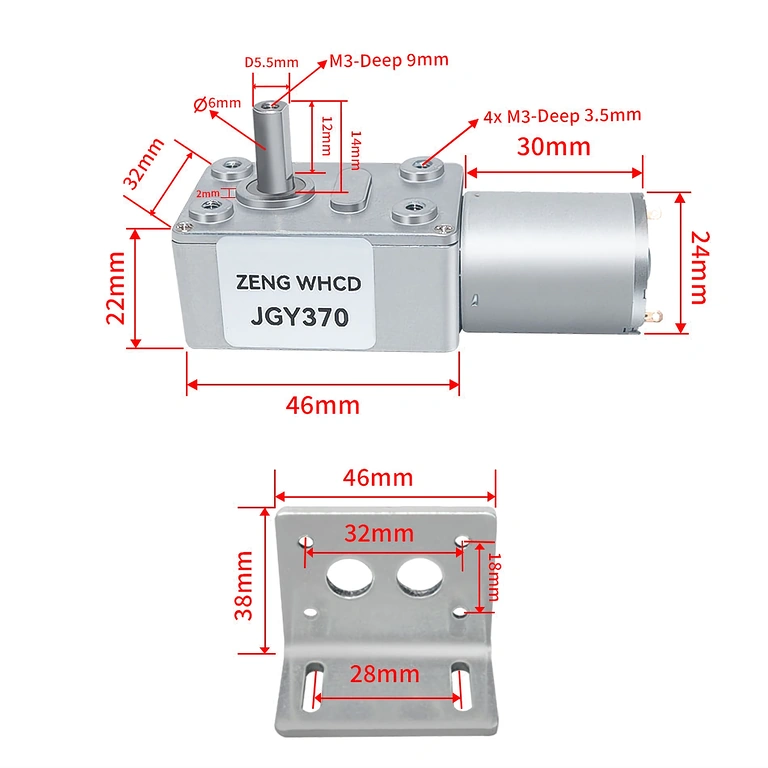
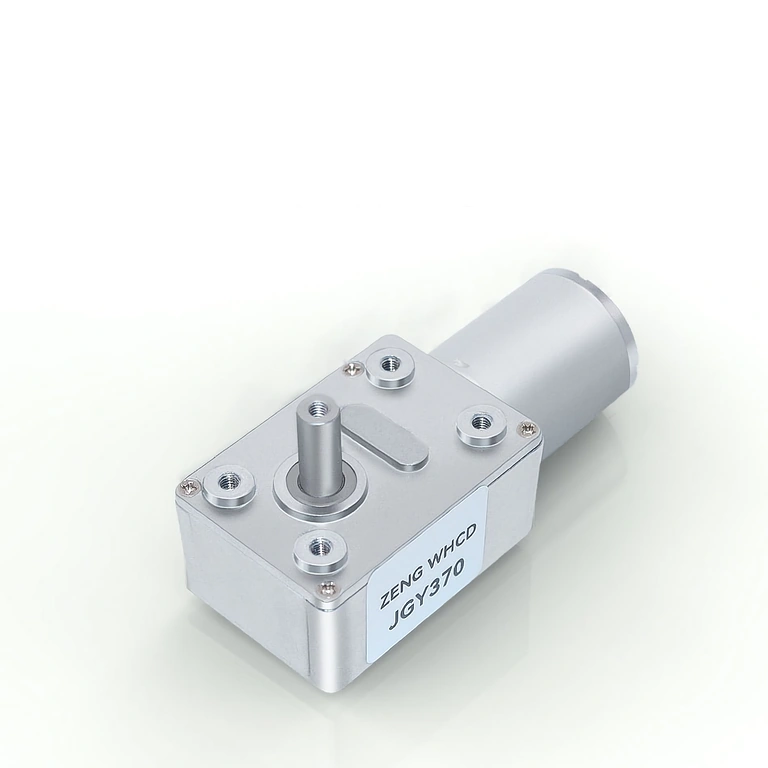
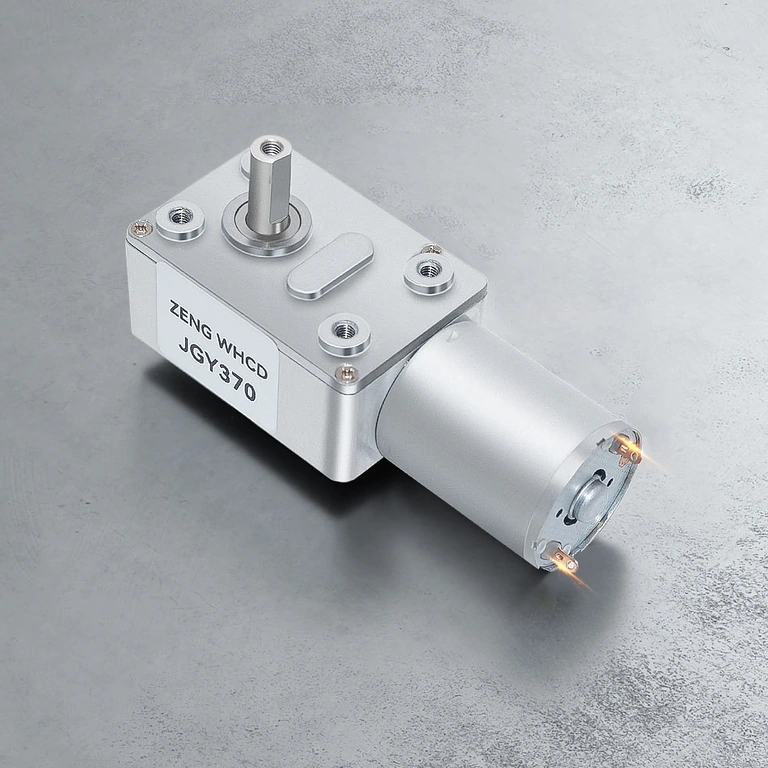
At the heart of this motor is the worm gear transmission—a design that converts the high-speed rotation of the DC motor into slow, controlled, and mechanically irreversible movement. Load power remains at 2.4W regardless of the chosen ratio, meaning you choose between speed and force without sacrificing efficiency. The compact housing and D-profile shaft allow for seamless integration into tight spaces without the need for custom adapters.
| Parameter | Value / Detail |
|---|---|
| Supply Voltage | 12V DC |
| Gear Type | Worm Gear |
| Available Gear Ratios | 87:1 / 200:1 / 600:1 |
| No-load Speed | 68 RPM (87:1) / 30 RPM (200:1) / 10 RPM (600:1) |
| Load Speed | 51 RPM (87:1) / 22 RPM (200:1) / 7 RPM (600:1) |
| No-load Current | 0.06 A |
| Load Current | 0.2 A |
| Load Torque | 2 kg·cm (87:1) / 6 kg·cm (200:1) / 15 kg·cm (600:1) |
| Load Power | 2.4 W |
| Output Shaft | D-profile, hardened steel |
| Gears | Metal, wear-resistant |
| Self-locking | Yes – mechanical, via worm gear design |
| Noise Level | Low, quiet operation |
| Main Applications | Actuators, labelers, blinds, dispensers, vending systems, DIY projects |
Usage Instructions
- Connect the motor leads to a stable 12V DC power source, observing the polarity for your desired direction of rotation.
- To reverse the rotation, simply swap the positive and negative connections.
- Avoid applying excessive radial or lateral force to the shaft without proper mounting support.
- Choose your gear ratio based on your application: 87:1 for higher speed, 600:1 for maximum torque.
- Always test the motor without a load before final installation.
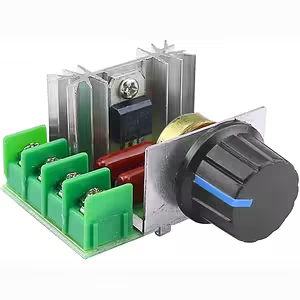
- For precise speed control, use a PWM signal with a recommended frequency between 1 and 5 kHz via a compatible motor driver.
Package Contents
- 1x GY-370 12V Gear Motor (selected gear ratio)
Frequently Asked Questions
What is self-locking and why does it matter?
When you cut the power, the worm gear physically prevents the shaft from rotating backwards under load. The mechanism remains locked in position without consuming energy or needing additional electronic brakes—essential for blinds, valves, or robotic arms.
Which gear ratio should I choose?
Choose 87:1 if you need speed (51 RPM under load, 2 kg·cm torque). Choose 200:1 for a balance of speed and force (22 RPM, 6 kg·cm). Choose 600:1 if you are moving heavy loads and speed is not a priority (7 RPM, 15 kg·cm).
Can I control the speed of the GY-370 motor?
Yes. Connect a compatible motor driver (such as L298N, L9110, or BTS7960) and apply a PWM signal. The average voltage will control the RPM. Do not connect the motor directly to Arduino or Raspberry Pi signal pins.
What forces can the shaft withstand?
The hardened steel D-profile shaft handles moderate axial loads well. For high radial forces, we recommend adding an auxiliary bearing support or a flexible coupling to prevent premature wear on the internal bearings.
Presentation Video
Photo Gallery
Reviews
There are no reviews yet.