


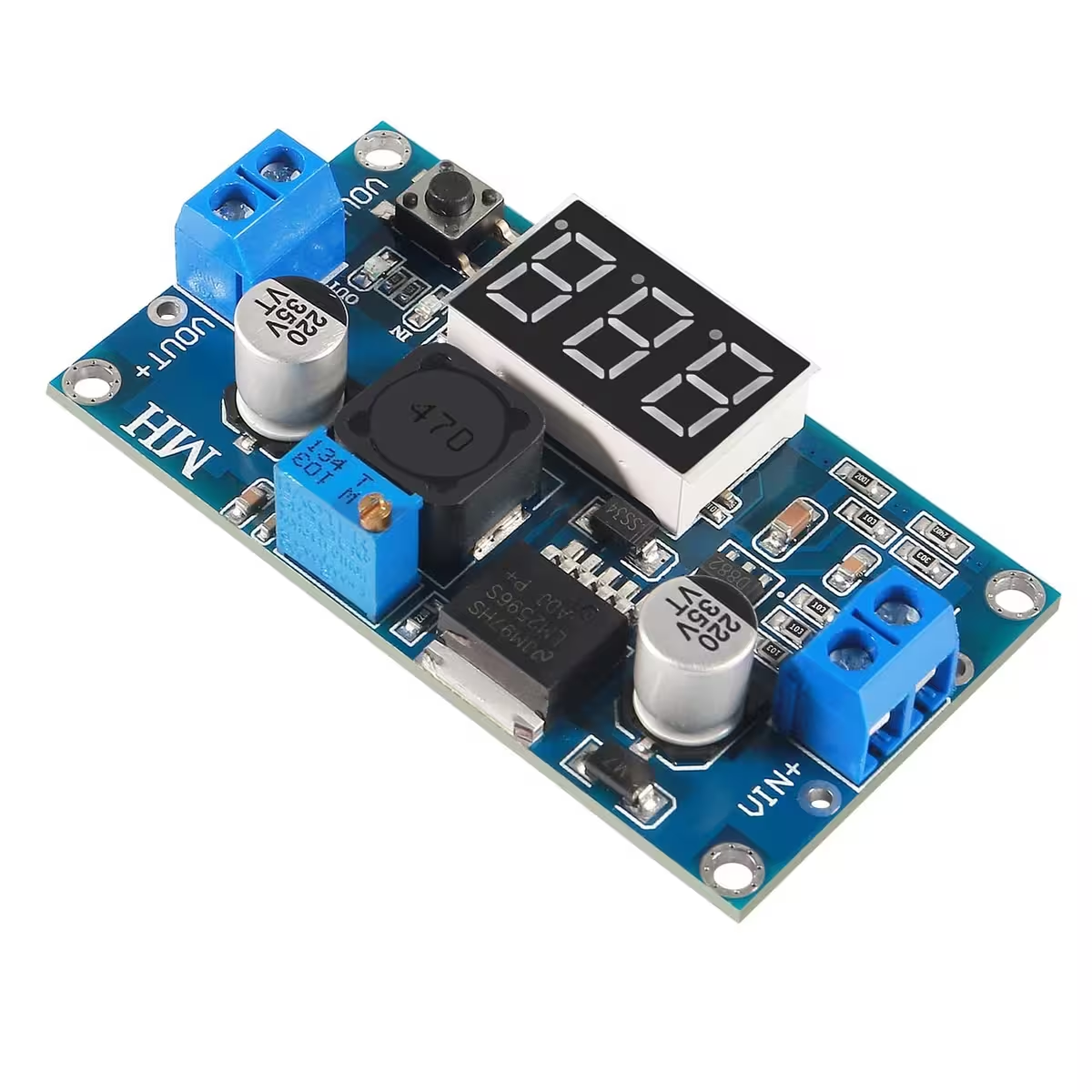
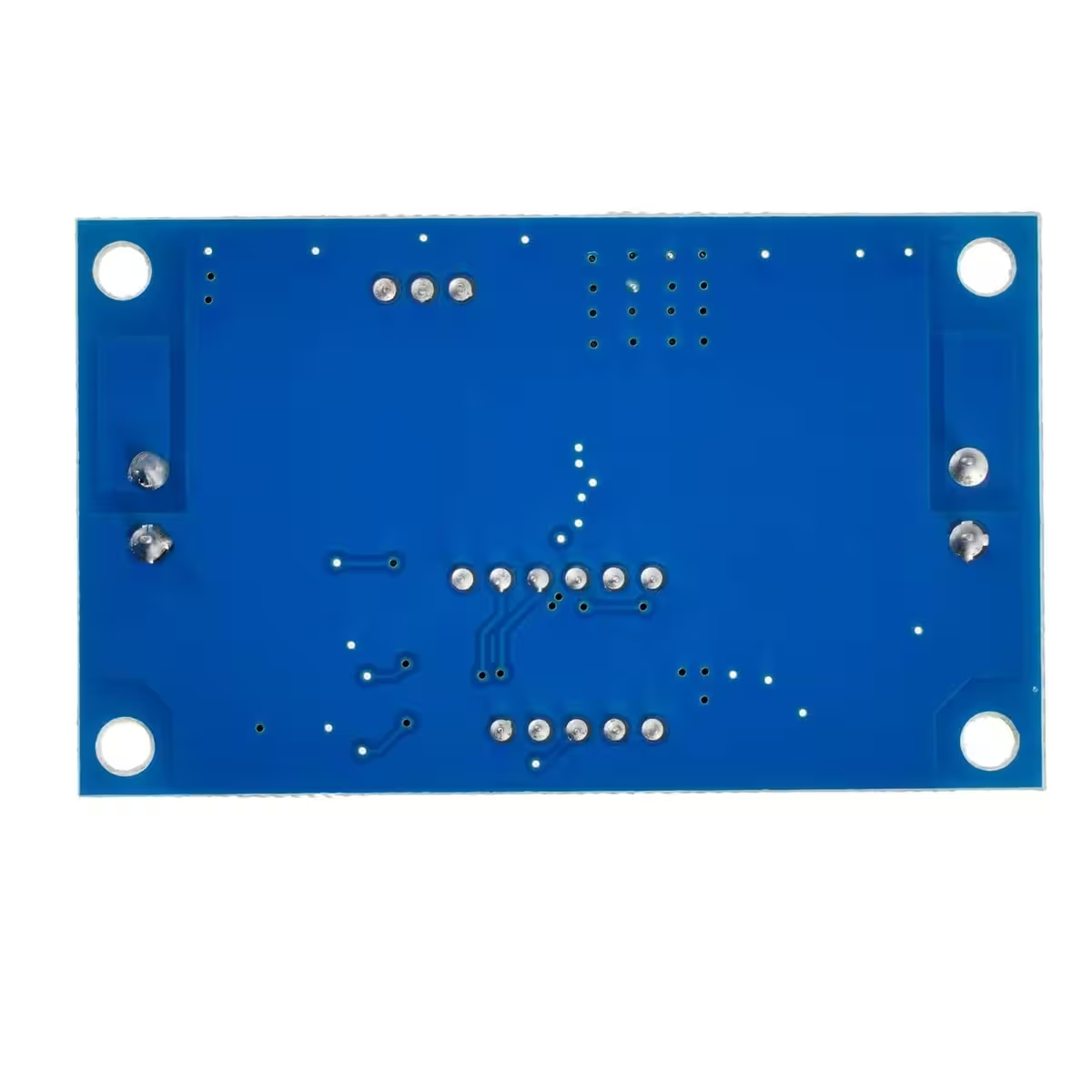
LM2596 DC-DC Step-Down Converter with LED Display – Precise voltage adjustment without a multimeter, up to 92% efficiency
Working on a project powered by batteries or a high-voltage adapter? While traditional linear regulators can get the job done, they often waste energy by converting excess voltage into heat, which compromises both stability and efficiency. The LM2596 step-down converter takes a smarter approach: it reduces voltage efficiently, provides real-time monitoring via an integrated display, and fits perfectly into compact builds.
Note: This module operates exclusively as a step-down (buck) converter. For proper operation, the input voltage must be at least 1.5V higher than the desired output voltage.
Why choose this model? (Key Advantages):
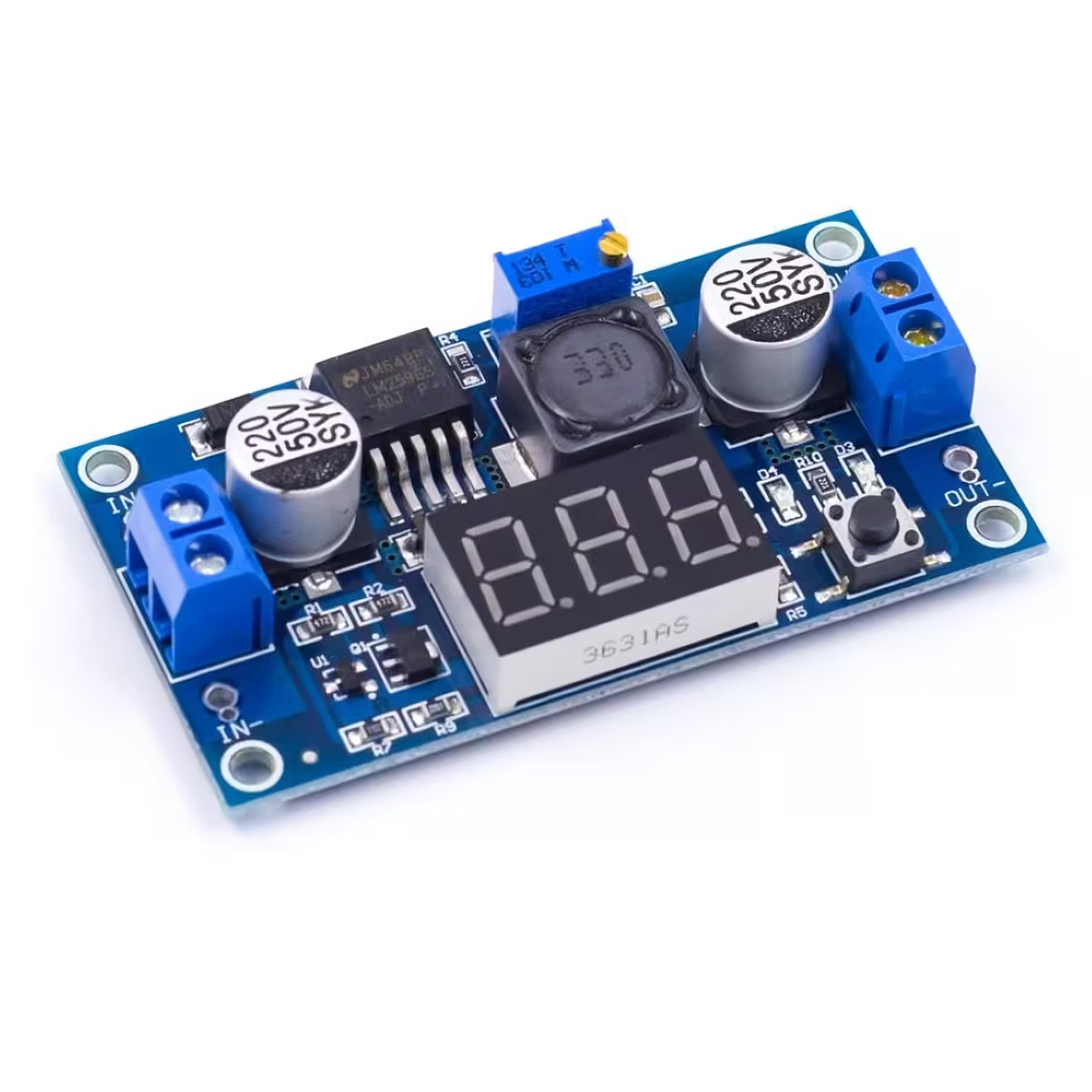
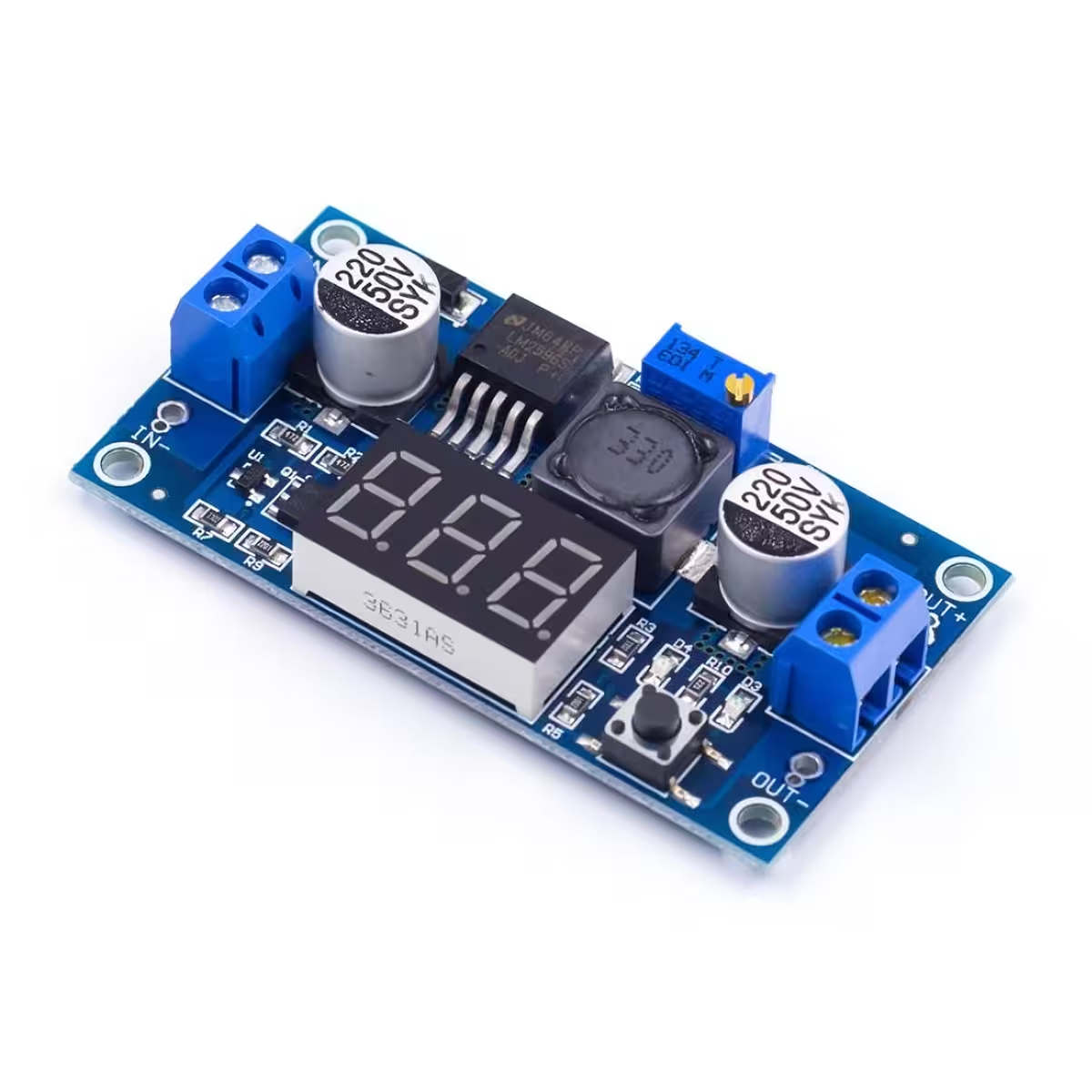
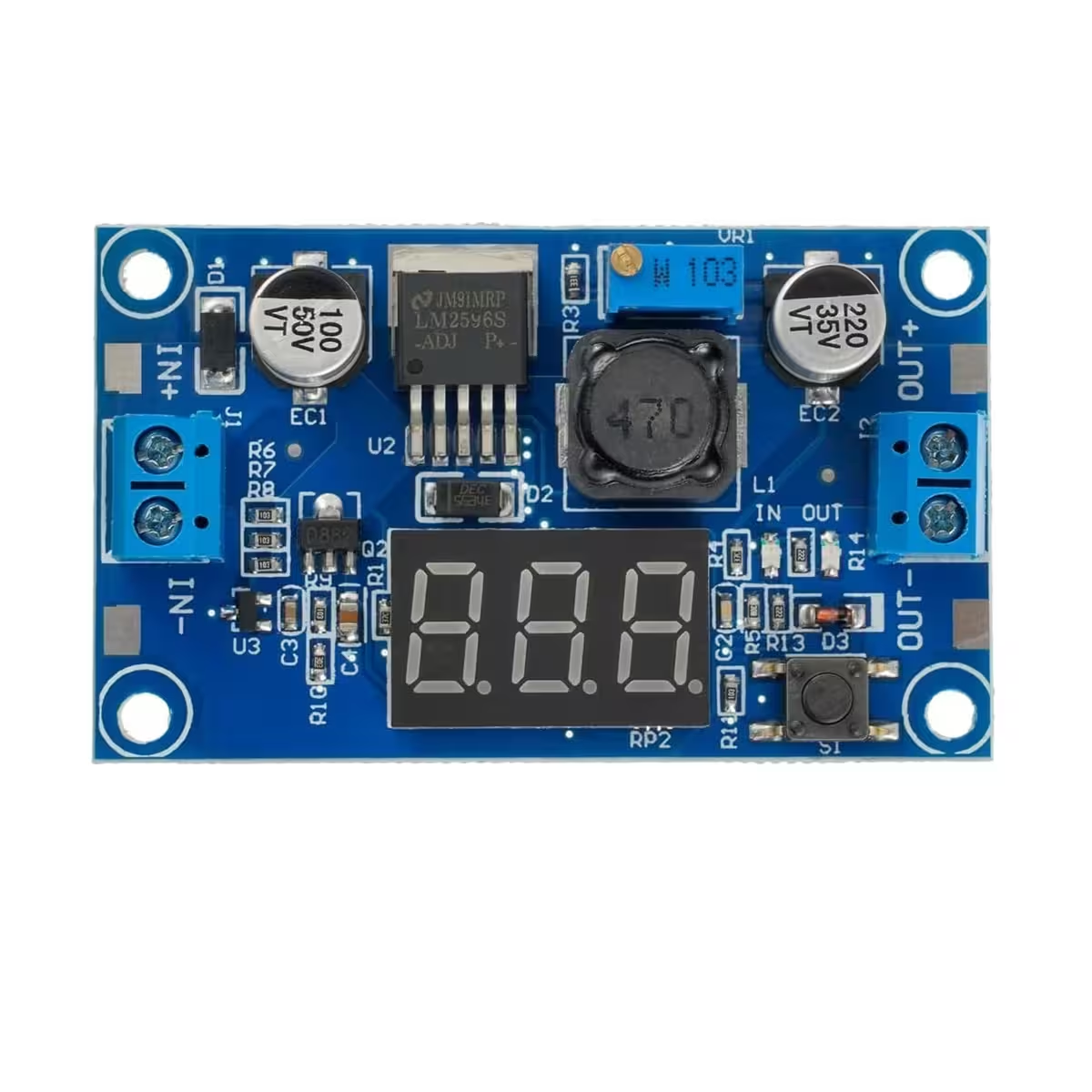
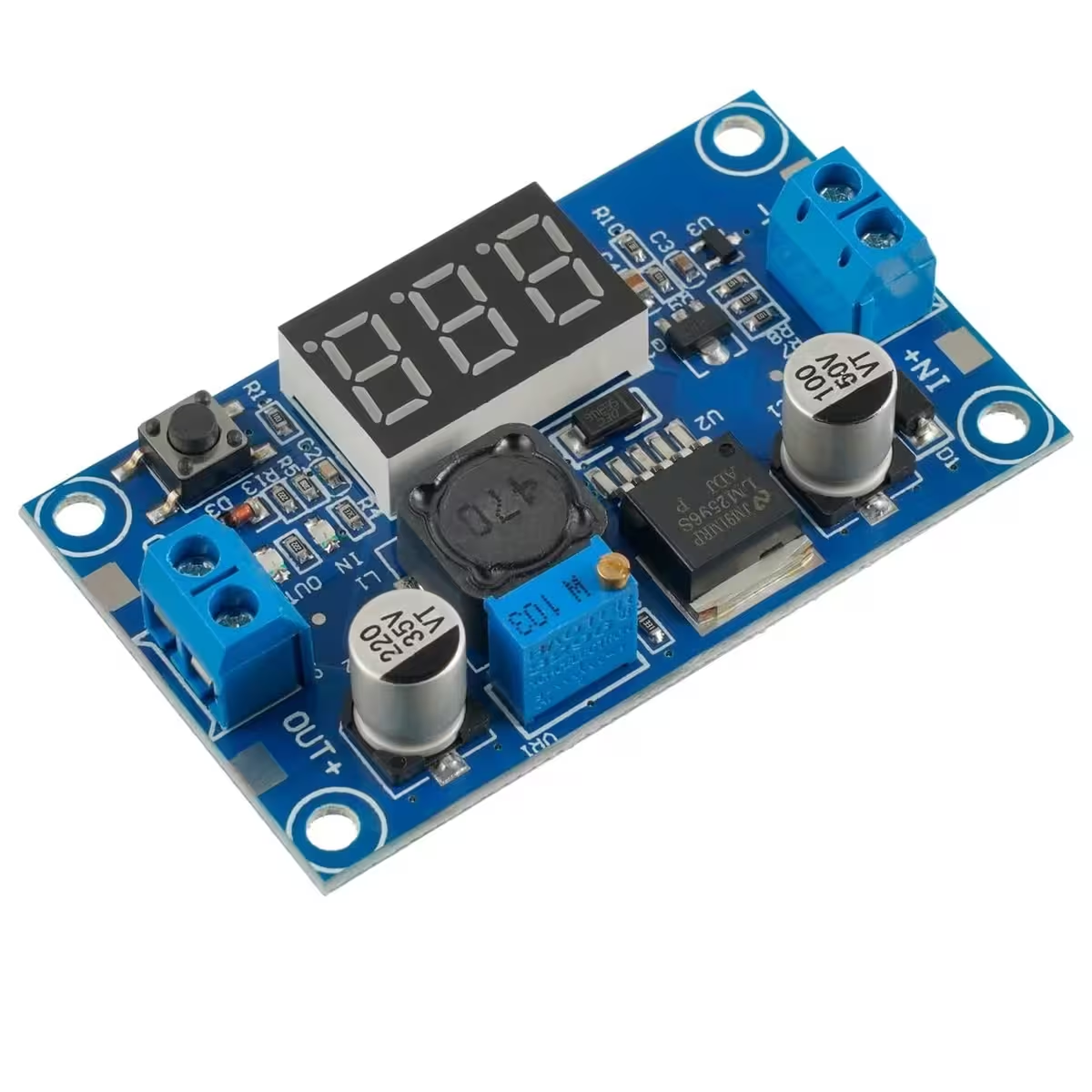
- Self-calibrating LED display — Simultaneously shows input and output voltage; no need for a separate multimeter during setup.
- Up to 92% efficiency — Compared to the ~50% efficiency of a standard LM7805 linear regulator, you lose significantly less energy as heat.
- 3A maximum current — Easily powers Arduino boards, ESP32, LED strips, and small DC motors from a single source.
- Multi-turn potentiometer — Allows for fine-tuned voltage adjustments with high precision, avoiding sudden jumps.
- Short-circuit and thermal protection — Keeps your connected circuits safe even if a wiring error occurs.
- Solid capacitors on a robust PCB — Built to withstand intensive use and repeated thermal fluctuations.
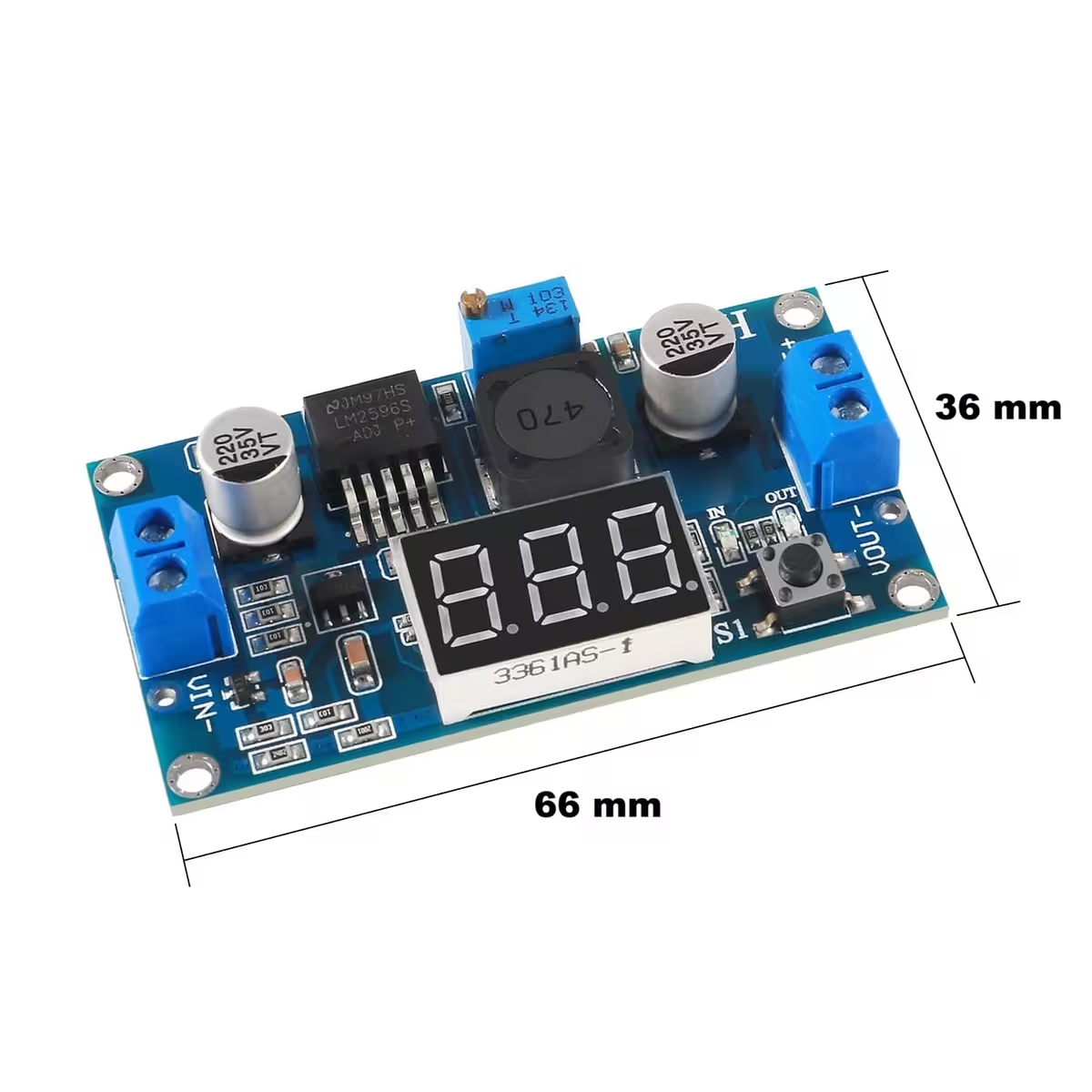
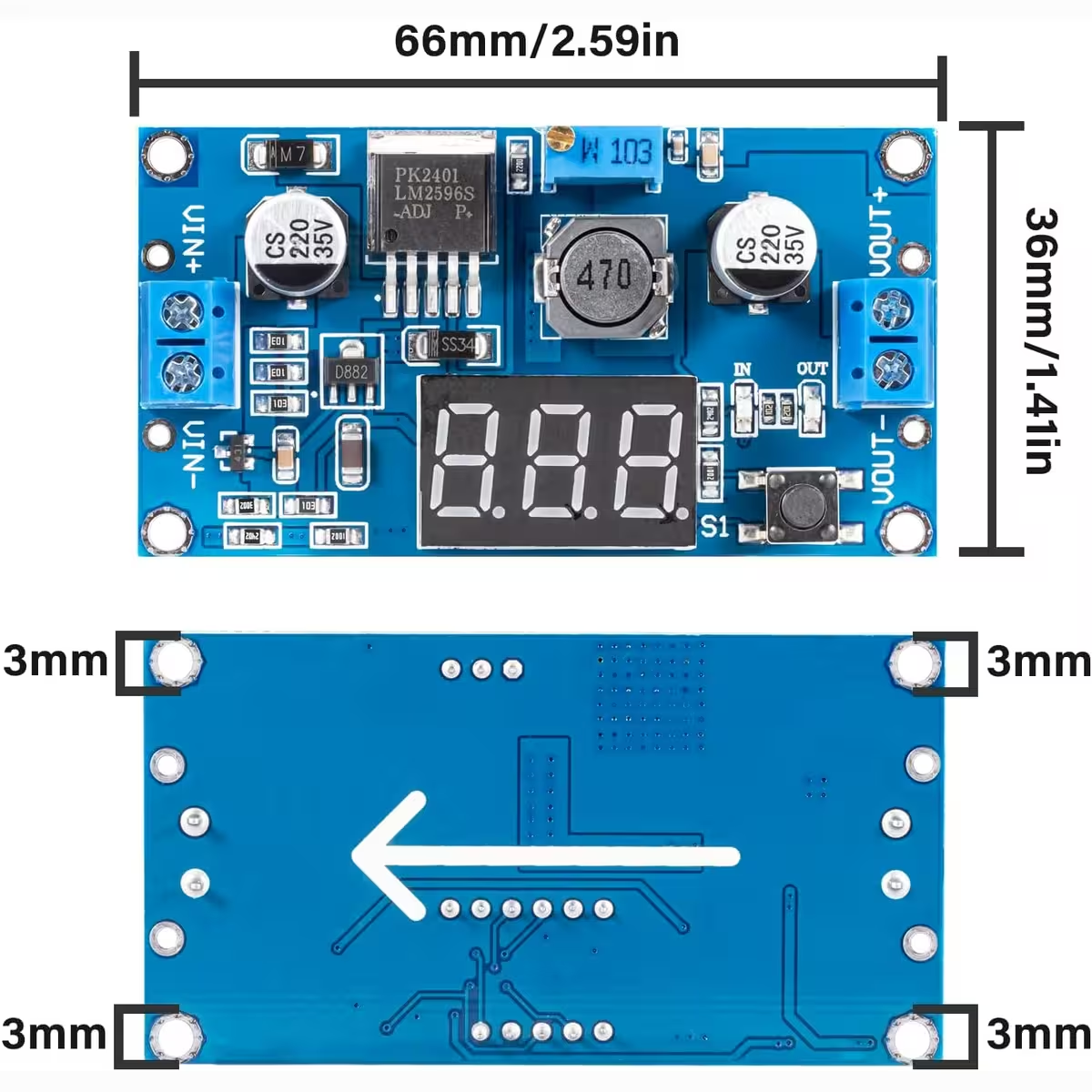
- Compact 66×36×11 mm footprint — Fits easily into any project enclosure, breadboard, or control panel.
Performance and Technical Details
The LM2596 integrated circuit operates at a switching frequency of 150 kHz — high enough to keep output voltage ripple to a minimum without requiring bulky filtering components. Unlike a linear regulator that dissipates the voltage difference as heat, this switching converter transforms it into useful current, keeping the module cool even under 2A loads.
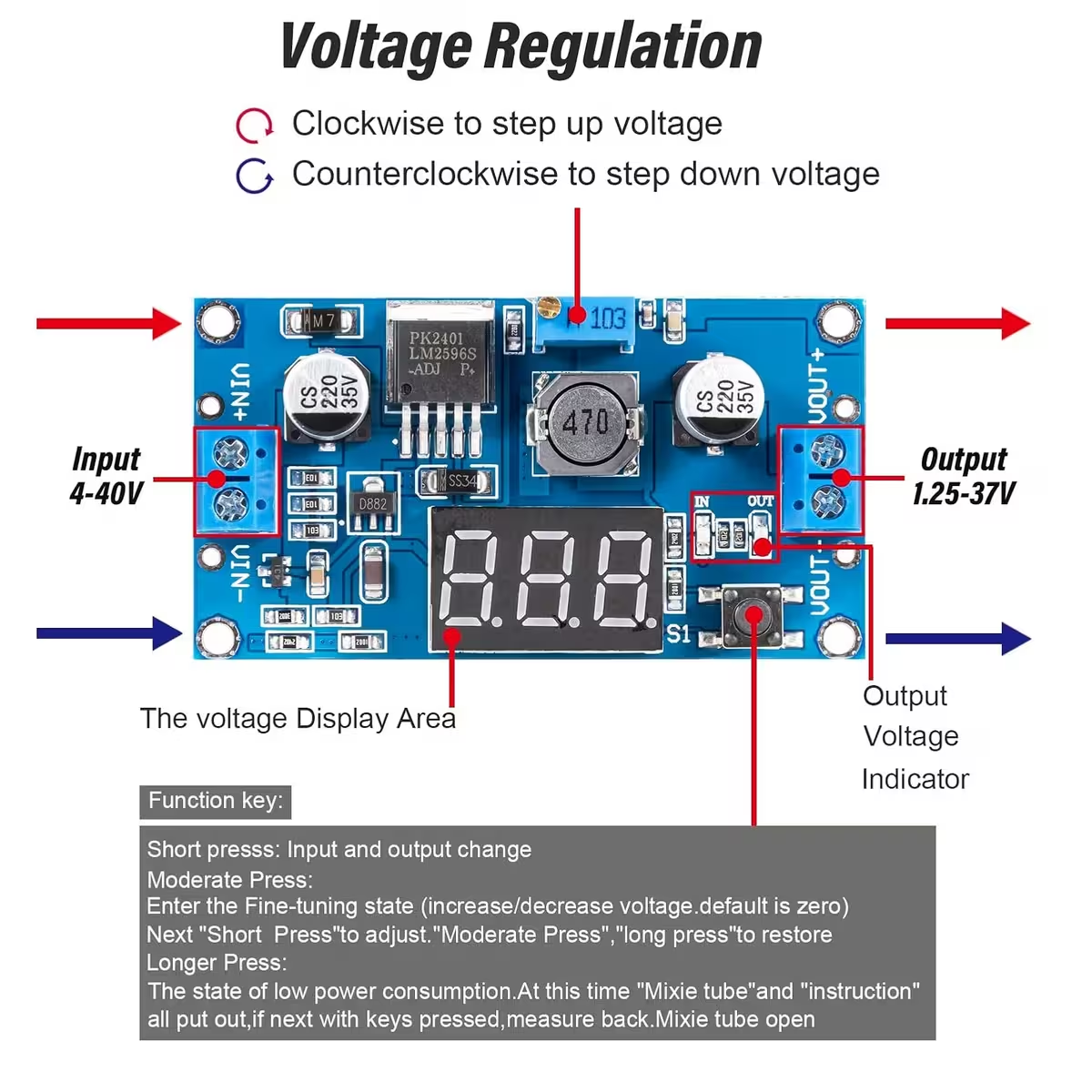
The multi-turn potentiometer allows for granular adjustment between 1.25V and 37V, while the self-calibrating LED display confirms your settings instantly. This module is tested and recommended for powering Arduino Uno / Mega / Nano boards, ESP8266 / ESP32 modules, Raspberry Pi, RGB LED drivers, and low-power DC motor controllers.
| Parameter | Value / Detail |
|---|---|
| Regulator Chip | LM2596 |
| Input Voltage | 4V – 40V DC |
| Output Voltage | 1.25V – 37V DC (adjustable) |
| Max Output Current | 3A (recommended ≤2.5A continuous) |
| Conversion Efficiency | Up to 92% |
| Switching Frequency | 150 kHz |
| Minimum Input-Output Differential | ≥1.5V |
| Display | Dual LED with self-calibration (IN and OUT voltage) |
| Voltage Adjustment | Multi-turn potentiometer |
| Integrated Protections | Short-circuit, over-temperature |
| Capacitor Type | Solid capacitors |
| Module Dimensions | 66 × 36 × 11 mm |
| Operation Mode | Step-Down (Buck) only |
Package Contents
- 1× LM2596 Step-Down DC-DC Converter Module with LED Display
Frequently Asked Questions
Can this be used as a step-up (boost) converter?
No. The LM2596 module functions exclusively as a step-down converter: the output will always be lower than the input. If you need to increase voltage, please look for a dedicated boost module, such as the MT3608.
How do I adjust the output voltage?
Simply rotate the multi-turn potentiometer on the module while monitoring the value directly on the LED display. There is no need for an external voltmeter — the display updates in real-time as you adjust.
What is the continuous current rating without overheating?
While the peak current is 3A, we recommend a maximum of 2.5A for continuous use. At loads under 2A, the module typically runs without an additional heatsink. If you are operating near the limit or in a high-temperature environment, ensure adequate airflow or attach a small heatsink to the chip.
Does it work directly with Li-Ion or LiPo batteries?
Yes. A 3.7V–4.2V battery is sufficient as an input source, provided the desired output voltage is at least 1.5V lower. For example, you can easily step down a 7.4V LiPo battery to a stable 5V for Arduino or 3.3V for ESP32.
Reviews
There are no reviews yet.